What’s Growing at the National Coal Mining Museum Allotment
June Update
There’s something deeply satisfying about watching an empty bed of earth transform into something full of life and that’s exactly what’s been happening at our allotment here at the National Coal Mining Museum. Here’s a look at everything our volunteers have been up to recently!
Raised Beds
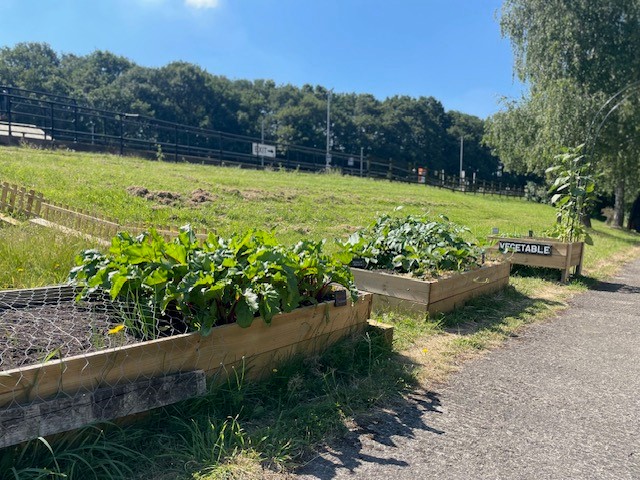
Every good growing season starts beneath the surface, and ours began with some serious hard work from our wonderful volunteers. Simon built our raised beds from scratch, some sitting at ground level, others slightly elevated for easier planting and accessibility. Once the beds were in place, the team filled them with fresh compost generously donated by the Wickes Community Programme, giving everything we grow the rich, nourishing foundation it needs.
Raising the arches
Our metal arches are up! We’ve secured and erected climbing frames ready for our runner beans and borlotti beans to wind their way skyward. Giant Russian Sunflowers have been planted and are thriving in these beds, as are sweetcorn plants and leeks. We can’t wait to see the beans wind their way over the arches!
Planting a mix of vegetables
As this is our first season of planting, we’ve gone for real variety of fruit and veg this year. The plot is now home to coriander, leeks, sweetcorn, runner beans, potatoes, rhubarb, strawberries, beetroot, chard, red onion, cabbage, carrots, courgette, cucumber, pumpkin, and tomatoes. We’ve also added more spring onions to the mix as part of a succession planting strategy. When they’re big enough, we’ll split the seedlings to increase our yield.
Pesky wildlife
We’ve put protective covers over the cabbages and carrots to keep the cabbage white butterflies at bay. These creatures can cause real havoc if left unchecked as they lay clusters of tiny yellow eggs on the underside of cabbage leaves. Once the caterpillars hatch they munch their way through the leaves. We’ve also had to think carefully about our defences against a bold hare who has taken a shine to the allotment – especially the chard!
Wildflower meadow
This month we have had a community group called Open Country on site planting lots of beautiful wildflower plug plants. We’ve fenced off this dedicated wildflower meadow, giving nature a little corner to do its own thing. It’s great for pollinators and biodiversity and hopefully will soon be beautiful to look at.
And now…we wait!
With the beds planted, the arches up, and the defences in place, there’s one final task: patience. The vegetables are growing at their own pace (helped by the recent rainy and sunny weather), and all we can do is tend to them, keep a close eye out for any unwanted visitors, and look forward to the harvests ahead.
We’ll keep you posted as the season unfolds. Why not come along and see the allotment for yourself?