From Picks to Shearers: The Evolution of Coal Cutting in British Mines
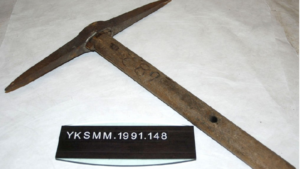
In the early days of British coal mining, extracting coal required intense physical effort and hard manual work. A miner, often lying on his side in a seam barely a metre high, would chip away at the coal with a short-handled pick and the cut coal was loaded into tubs by hand using shovels. The work was exhausting, dangerous, and slow – yet it powered the nation’s factories and railways, and heated homes.
By the late nineteenth and early twentieth centuries, Britain’s appetite for coal demanded greater efficiency. Mechanical coal cutters began to appear underground, powered first by compressed air and later by electricity. Early models used a rotating chain fitted with small cutting picks, similar in principle to a giant chainsaw. The machine was positioned against the coalface, and the chain bar was driven into the seam, cutting a groove sometimes over a metre deep. This process weakened the coal above it, making it easier for miners to break the seam away using wedges, explosives, or picks.
The real transformation came with mechanised longwall mining. Rather than individual miners working scattered sections, an entire wall of coal could be extracted in one continuous operation. After nationalisation in 1947, the National Coal Board accelerated investment in mechanised systems, particularly in deep collieries across Yorkshire, Nottinghamshire, and South Wales. At the centre of this system was the coal mining shearer.
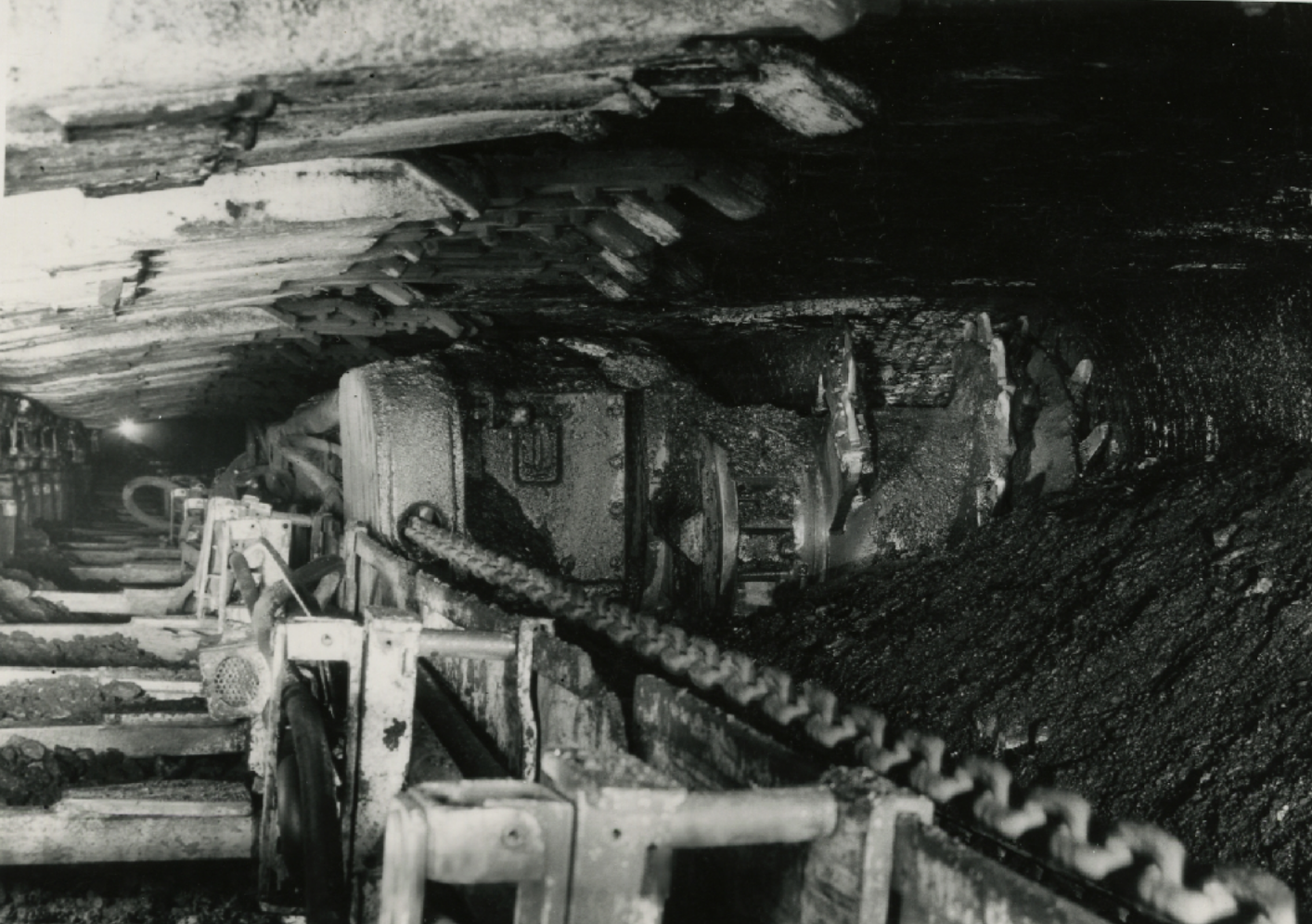
A shearer is a large, electrically powered machine that travels back and forth along the coalface. Mounted on an armoured face conveyor and working beneath a line of hydraulic roof supports, it cuts coal using rotating drums studded with hardened steel picks. As the drums shear into the seam, coal falls directly onto the conveyor and is carried away for transport out of the mine. Once the shearer has passed, the roof supports advance forward, allowing the roof behind them to collapse in a controlled manner — a defining feature of longwall mining.
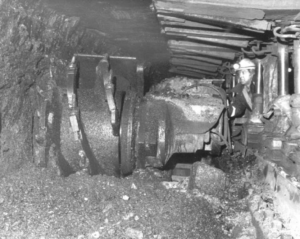
The shearer quickly became essential to underground mining in Britain. Coal seams were often narrow, faulted, and rich in methane gas. Manual cutting meant prolonged exposure at the face, increasing the risk of injury, roof falls, and explosion. Mechanisation reduced the number of workers required directly at the face and shortened the time spent in the most hazardous positions. Modern shearers were built with explosion-proof electrical components, emergency stop systems running along the face, and protective housings designed specifically for gassy environments.
Productivity increased dramatically. Where a nineteenth-century miner might produce a few tonnes in a shift, a fully mechanised longwall face equipped with a shearer could produce hundreds or even thousands. Coal extraction became a coordinated industrial process rather than a series of individual efforts.
Yet the shearer operates in one of the harshest industrial environments imaginable. Underground conditions in British coal mines included high temperatures, abrasive dust, water ingress, and hard stone bands within the seam. These conditions caused rapid wear to cutting picks and heavy strain on motors and haulage systems. Energy consumption was significant, requiring robust and carefully protected electrical supplies. Even the most advanced machine had to contend with the relentless pressures of the earth.
Today, deep coal mining in Britain has ended, but the evolution from pick to shearer remains a powerful symbol of industrial progress. The shearer represents more than machinery; it reflects the transformation of coal mining from manual craft to integrated engineering system – a story of adaptation beneath the surface that shaped Britain’s industrial age.
There are a number of early coal cutters and shearers on display at the National Coal Mining Museum and visit the Technology Gallery to see our double ended shearer and find more details about how it was used.
Written by Volunteer Ian